The Visibility Gap in OT Cybersecurity
Reflections from an OT Cybersecurity Practitioner
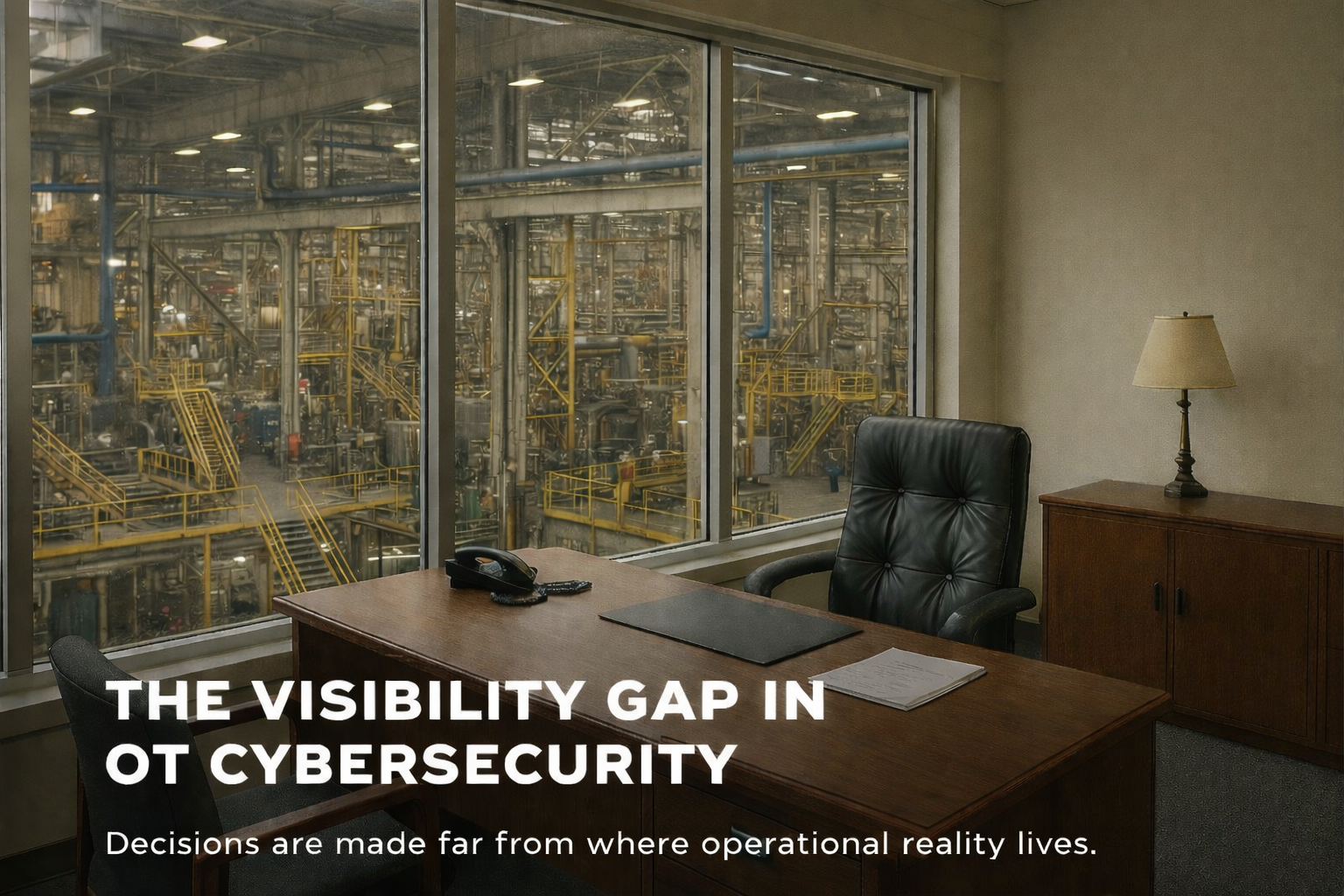
In Part 1 of this series, I reflected on why OT cybersecurity maturity is often constrained by governance behaviour, incentives, and decision-making rather than technology. One related theme that repeatedly surfaces in practice is the issue of management visibility, specifically, the gap between operational reality and what senior leadership believes is happening.
This visibility gap is not unique to any one sector or region. It emerges wherever operational complexity meets organisational hierarchy. In OT environments, where safety, uptime, and reliability take precedence, this gap becomes particularly pronounced.
Operational teams naturally operate close to the detail. They understand the context, constraints, legacy dependencies, vendor limitations, and trade-offs that underpin safe and continuous operations. In these environments, technical cybersecurity decisions cannot be separated from maintenance cycles, uptime requirements, safety case considerations, or regulatory obligations.
By the time that operational reality travels upward, it often becomes compressed into dashboards, reports, or KPIs that optimise for clarity, brevity, and confidence. This is rarely done to obscure problems. More often, it reflects a very human desire to avoid triggering scrutiny, conflict, or extra work. In other cases, it reflects a belief that complexity is noise to be filtered out rather than context to be preserved.
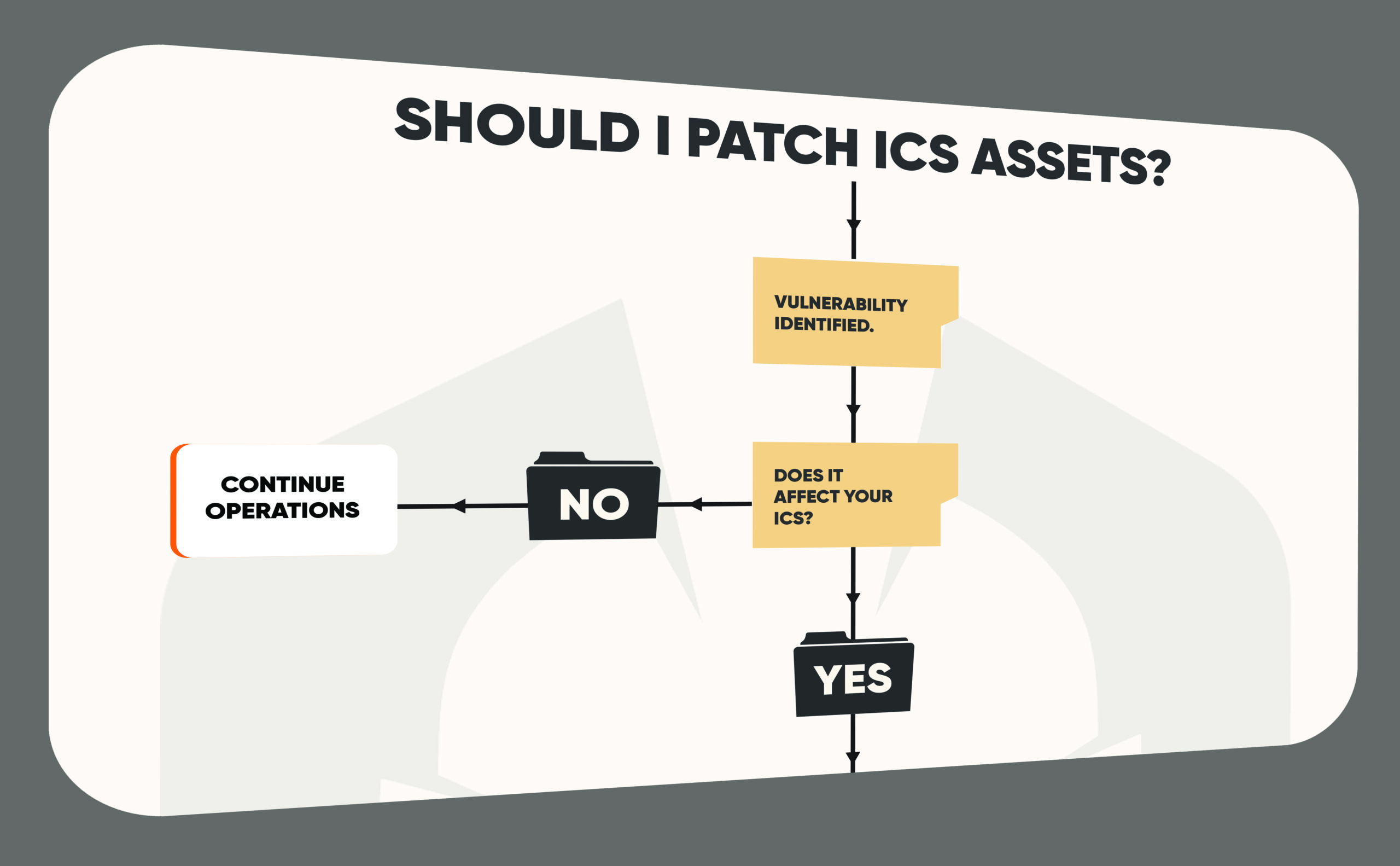
For example, patching deferrals driven by availability concerns may be reported as “accepted risk”, but the operational constraints that shaped that decision are often invisible to senior leaders. Legacy dependencies, vendor support limitations, and mandatory change windows rarely survive abstraction into dashboards or KPI summaries.
The difficulty is that cybersecurity decisions are made at the level leaders understand, not at the level practitioners operate. When visibility narrows, decisions can drift out of alignment with operational truth. In OT cybersecurity, that misalignment does not always manifest as incidents. Instead, it commonly appears as stalled remediation, repeated risk exceptions, or maturity that never quite matches expectations, despite investment and effort.
More mature organisations recognise this as a visibility problem, not a reporting problem. They avoid asking for “more reporting” and instead work to create conditions where transparency is safe, curiosity is encouraged, and progress is rewarded over optics. They treat operational constraints as design inputs rather than as obstacles, and they align KPIs with outcomes rather than comfort.
Culture plays a significant role. In some regions, authority gradients make challenge difficult. In others, scrutiny is normalised, but accountability is feared. Technical leaders may sanitise information to avoid creating the impression of failure, while executive leaders may misinterpret absence of noise as absence of risk. These are not failures of intent, but reflections of the systems and incentives people operate within.
Closing this gap does not require radical transparency or wholesale restructuring. More often, it depends on creating the conditions for challenge, context, and operational truth to be surfaced without triggering defensiveness. Organisations that do this well tend to progress faster, with fewer surprises and fewer cycles of re-prioritisation.
At OTIFYD, we routinely help organisations bridge this divide, converting operational reality into leadership visibility without triggering blame or unnecessary friction. In our experience, once leadership understands the true operational context, cybersecurity decisions accelerate, priorities become more realistic, and maturity progresses faster.
OT cybersecurity does not suffer from a lack of data. It suffers from a lack of clarity at the level where decisions are made. Closing that gap is not merely a communication exercise. It is a cultural, organisational, and leadership task.
By Serkan Yusuf (Jan 2026)